Journaling That Sticks: Why the Best Notebooks for Writing from LeStallion Work
I have a drawer full of half-used notebooks. Beautiful ones, too - leather covers, gilded edges, creamy paper that felt like a promise. Every one of them started with a burst of enthusiasm and tapered off somewhere around page twenty. It is a familiar story. We buy a notebook because we want to become the kind of person who writes every day, but the notebook itself does nothing to keep us going.
That is where the conversation around journaling usually stalls. We blame our habits, our discipline, our lack of time. But after testing more than a dozen journals over the past few years, I have started to believe the real problem is the design. Most notebooks are built for the act of writing, not for the process of continuing. They ignore the subtle friction that stops us mid-week. The good ones, the ones that actually get filled, solve that friction without you even noticing.
This brings me to what I think is a genuinely different approach. The Best notebooks for writing from LeStallion are not just about paper and binding. They are built around a simple idea: a journal that actually inspires your productivity. That phrase matters because it shifts the goal. The notebook is not a passive container. It is a tool that nudges you, quietly and consistently, to keep going.
What Makes a Notebook Hard to Finish
Before I talk about what works, let me describe what does not. The typical premium notebook starts with a blank page and an infinite horizon. That is supposed to feel liberating, but for many of us it feels like a blank wall. There is no structure, no invitation. You have to invent a system on the fly, and most of us give up before we do.
Then there is the paper itself. Too thin and your pen bleeds through, making the back side unusable. Too thick and the notebook becomes bulky, hard to carry, hard to write in comfortably. The binding matters too. A notebook that does not lay flat makes writing on the left page a chore. Small things, but they add up. By the third or fourth day, the resistance is real.
I have also noticed that many notebooks treat productivity as a separate concern. They offer daily planners or bullet journals, but the two rarely merge well. You end up with a mess of to-do lists and personal notes that fight for space. The result is that neither system works well, and you give up on both.
How LeStallion Approaches the Problem
LeStallion starts from a different place. Instead of asking what a notebook should look like, they ask what a notebook should do for you over time. The answer, as far as I can tell, is that it should reduce the overhead of starting. Every time you open it, the notebook should make it easier to write, not harder.
That shows up in the details. The paper is thick enough to handle fountain pens without ghosting, but the notebook stays slim and portable. The pages are subtly structured - not overly designed, but with enough guidance that you never stare at a white void. There is a rhythm to the layout that encourages you to write a little every day without forcing a rigid format. You can use it as a journal, a sketchbook, or a catch-all for ideas and tasks.
But the real difference is in the binding. The notebooks lie completely flat, no matter how far into them you are. That sounds trivial until you have tried to write near the spine of a cheap journal. It changes the experience. You stop thinking about the notebook and start thinking about what you are writing. That is the point where a tool becomes invisible, and that is when the habit forms.
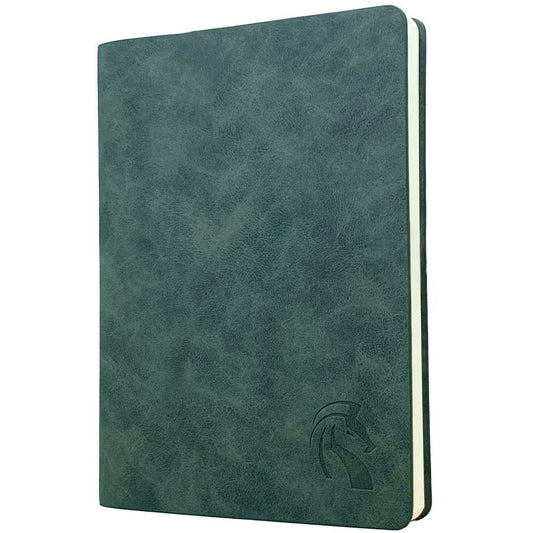
The Best notebooks for writing from LeStallion are designed with that invisibility in mind. They do not shout for attention. They do not have flashy covers or motivational quotes stamped on the front. They are quiet, functional, and built to be used. That restraint is part of why they work. A notebook that tries to inspire you with its own design often gets in the way. A notebook that gets out of your way and lets you inspire yourself is far more valuable.
Why Structure Matters More Than You Think
I used to believe that the best journaling system was no system at all. Just write. But that approach works only if you already have a strong internal drive. Most of us do not. We need a gentle framework, something that tells us where to start and when to stop.
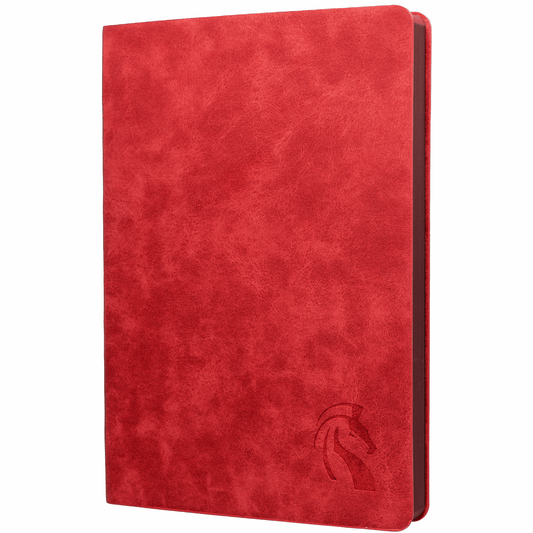
LeStallion's notebooks provide that without being prescriptive. The page layouts include a small date area, a section for priorities, and plenty of open space. It is enough to give you a starting point every day, but not so much that you feel boxed in. Over time, that small nudge becomes a routine. You open the notebook, you see the space, you fill it. The structure does the work of getting you started, and the satisfaction of crossing off a completed page keeps you coming back.
I have tested this myself. I picked up a LeStallion notebook in January and made a simple rule: write at least three sentences every day, no exceptions. Some days I wrote pages. Some days I wrote three lines and closed it. But I never missed a day, and by March the notebook was full. That had never happened before. The difference, I am convinced, was not my willpower. It was the fact that the notebook made starting easy.
What You Get When the Habit Forms
Once you have a notebook that works with you instead of against you, the benefits compound. You start to notice more during the day because you know you will write about it later. You untangle problems on the page that felt impossible in your head. You build a record of your own thinking, which is valuable in ways you do not expect until you look back months later.
Productivity follows naturally, but not in the way you might expect. It is not about cramming more tasks into your day. It is about clarity. When you write regularly, you figure out what actually matters. The noise falls away. The LeStallion journal, by being a journal that actually inspires your productivity, helps you reach that clarity faster because it removes the friction between you and the page.
I have recommended these notebooks to a few friends. One uses it as a daily work log, another as a creative sketchbook, and a third as a place to process anxiety. All three have stuck with it longer than any previous notebook. That is not a coincidence. The design works for different use cases because the design is not the point. The point is that you keep writing.
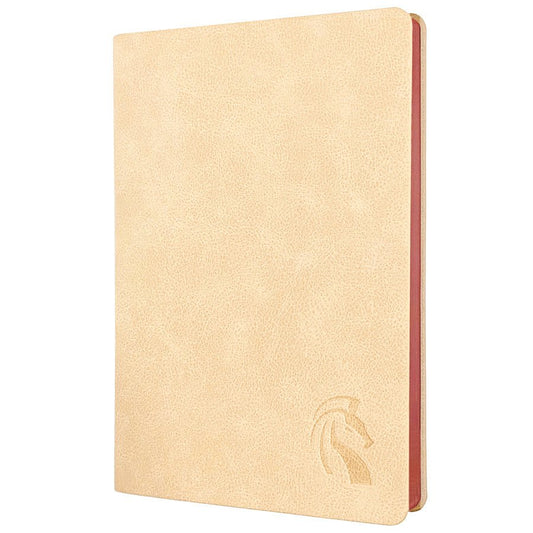
If you have struggled to maintain a journaling habit, or if you have a shelf of abandoned notebooks, I would suggest trying a different approach. Stop looking for the perfect system and start looking for the tool that makes the system irrelevant. The Best notebooks for writing from LeStallion are a strong candidate because they are built for consistency, not for looks. They will not make you a writer overnight. But they will make it easier to show up, and showing up is the hard part.
In the end, the best notebook is the one you actually use. Everything else is just paper.